

Workplace First Aid Supplies: How Many Kits and What Goes In
A workplace first aid kit does not have to comply with BS 8599-1 to meet UK legal requirements: according to the UK Government, Regulation 3 of the Health and Safety (First-Aid) Regulations 1981 requires employers to provide equipment and facilities that are adequate and appropriate to the circumstances.
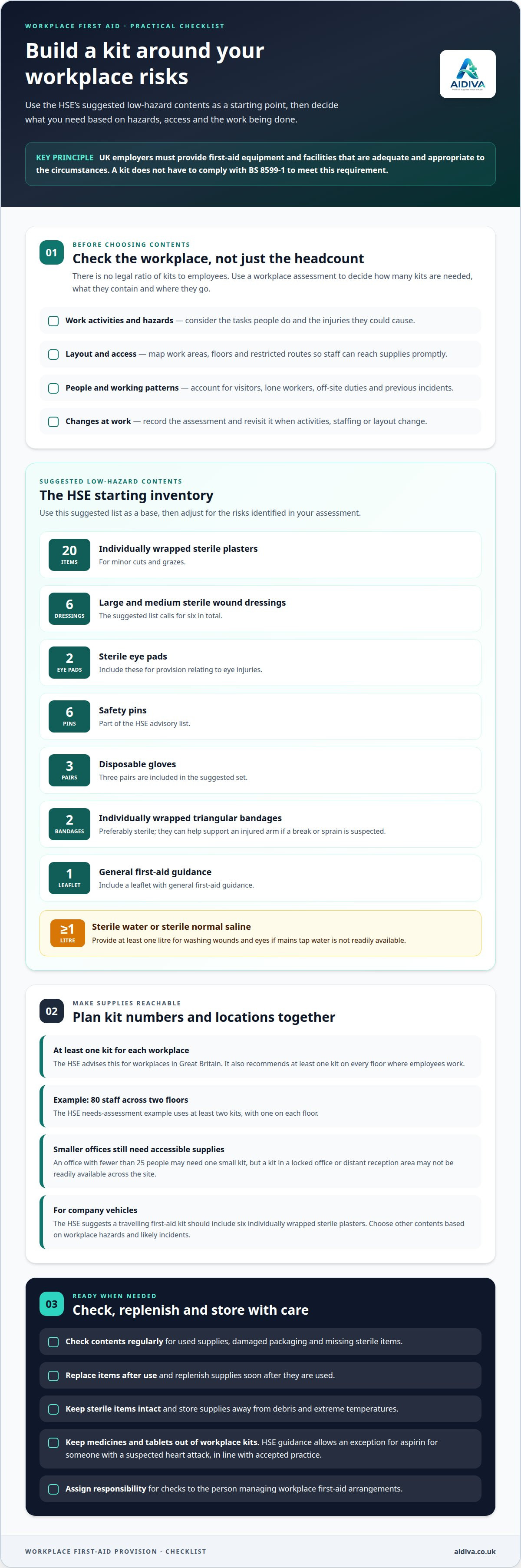
The Health and Safety Executive (HSE) advises employers in Great Britain to provide at least one first-aid kit for each workplace. There is no legal ratio of kits to employees, so choosing first aid supplies for work means matching the number, contents and locations of kits to your assessment of the workplace, its layout, workforce and hazards.
This guide explains how to decide how many kits you need, what to stock for common cuts, burns and eye injuries, and how to check and replenish supplies so they’re ready when needed.
Key Takeaways
- Base your kit provision on your workplace assessment, including hazards, workforce and layout, rather than relying on a fixed employee ratio.
- Place kits where staff can reach them easily, with coverage on each floor where employees work.
- Use the suggested contents for common injuries as a starting point, then account for the risks and facilities at your workplace.
- Set a routine for checking supplies, replacing used or expired items and keeping incident records where required.
How many first aid kits does a workplace need?
According to the UK Government, the Health and Safety (First-Aid) Regulations 1981 set out UK employers’ first-aid duties. Under Regulation 3, employers must provide first-aid equipment and facilities that are adequate and appropriate in the circumstances, according to the UK Government.
The HSE advises providing at least one first-aid kit for each workplace in Great Britain, but there’s no legal ratio of kits to employees. A needs assessment helps determine whether you need more kits, facilities or first-aid personnel. Consider staffing, layout, hazards, working patterns and previous incidents. If your business receives visitors, include members of the public in your assessment. Use these factors to plan your first-aid supplies.
Assess each work area, not just the main office. A warehouse with machinery may need different supplies from a low-risk office. For public events, consider the site layout, activities, audience and access to emergency equipment. These details help determine where supplies should be kept and what they should contain.
The best workplace kit is one that suits your assessment, not a single option for every organisation. Compare contents and suitability for your hazards. A British Standard can guide selection, but UK employers aren’t legally required to use BS 8599-1-compliant kits. Plasters may suit minor cuts, while higher-risk tasks may call for additional materials identified through assessment. Choosing first aid supplies for work means matching provision to identified risks.
Check whether staff can reach each kit promptly from their work area. Include restricted routes and separate work areas in your assessment, then choose locations that make supplies accessible.
- Review tasks and the injuries they could cause.
- Map work areas, entrances and floors to identify access issues.
- Consider whether visitors, lone workers or off-site duties affect access.
- Use the assessment to set kit locations and contents.
Record your assessment and revisit it when work activities, staffing or the layout changes. This helps keep first-aid provision aligned with workplace risks.
Number of kits by workforce size and floor layout
Workforce size helps guide provision, but floor layout affects how quickly employees can reach a kit. The Health and Safety Executive recommends at least one kit on every floor where employees work. Its needs-assessment example uses an office with 80 staff across two floors: it needs at least two kits, with one on each floor.
A small office with fewer than 25 people may need one small kit, but access still matters. A single kit in a locked office or distant reception area may not be readily available across the site. Place kits in visible, accessible locations, and make sure staff know where they are. Signs and clear instructions can support access during an accident.
Work patterns may also call for portable supplies. Workers who travel frequently, work remotely or move between sites may need a kit they can carry. For company vehicles, the HSE suggests a travelling first-aid kit should include six individually wrapped sterile plasters. Choose any additional contents according to workplace hazards and likely incidents.
Kits and trained staff have different roles. Equipment supports immediate care, while staff need to know how to activate the workplace response. If your assessment finds that a first-aider isn’t required, an employer in Great Britain must appoint someone to manage first-aid arrangements, equipment and facilities, and call emergency services when needed.
Keep medicines and tablets out of workplace first-aid kits. HSE guidance allows an exception for aspirin for someone with a suspected heart attack, in line with accepted practice. Store sterile dressings and other supplies where staff can reach them, away from debris and extreme temperatures.
Check kit contents regularly and replenish items soon after use. A simple inventory helps you spot used supplies, damaged packaging and missing sterile items before another incident. Assign these checks to the person managing workplace first-aid arrangements.
First aid kit contents for cuts, burns and eye injuries
Workplace first-aid kit contents should reflect the injuries identified in your health and safety assessment. The HSE’s suggested list for low-hazard workplaces is a practical starting point, not a substitute for matching equipment to your specific hazards.
Suggested contents for low-hazard kits
The HSE advisory list suggests a basic set of supplies for common incidents. It includes 20 individually wrapped sterile plasters, six large and medium sterile wound dressings, two sterile eye pads, six safety pins and three pairs of disposable gloves.
The suggested list also includes two individually wrapped triangular bandages, preferably sterile, and a leaflet with general first-aid guidance. If mains tap water isn’t readily available, provide at least one litre of sterile water or sterile normal saline for washing wounds and eyes.
Choosing kit contents and size
Choose a kit with enough capacity for your assessed needs; the contents matter more than the label. Use the suggested list for low-hazard work, then consider any additional risks your assessment identifies, such as burns or injuries from tools.
For cuts, plasters and sterile dressings provide basic wound-covering supplies. Eye pads and sterile water or saline support provision for eye injuries. Triangular bandages can help support an injured arm if a break or sprain is suspected, while trained staff arrange appropriate further care.
Consider burn risks as part of your assessment. If mains tap water isn’t readily available, the suggested provision of one litre of sterile water or sterile normal saline can also support washing injuries. Add other materials only when your assessment indicates they’re needed.
Keep kit contents organised so staff can find supplies promptly during an incident. Check that sterile items remain in intact packaging and replace supplies after use. A kit matched to actual hazards is more useful than one filled with items that have no clear workplace purpose.
Kit checks, replenishment and incident records
Regular reviews help keep first-aid supplies suited to workplace needs. Record checks and incidents to make missing items and recurring risks easier to identify.
Checking and replenishing supplies
During a check, review the contents and replace supplies used or missing since the previous inspection. Monthly checks can help identify shortages, while replenishing items soon after use keeps the kit ready between reviews.
Compare the contents with your workplace’s chosen list. Note missing dressings, gloves or plasters, and record the check date and the person responsible. First-aiders can report supplies used during an incident so the appointed person can arrange prompt replacement.
Expiry dates and replacing supplies
Check dates to identify supplies that have passed their marked use-by date. Remove expired items and replace them with suitable supplies, since an out-of-date dressing may not be appropriate for use.
At each monthly review, inspect packaging for damage and check expiry dates on sterile dressings and other dated items. Organise replacement stock and update the contents record when items change. Keep the kit aligned with your needs assessment rather than relying only on a British Standard checklist.
Record each inspection, including shortages, replenishment and damaged packaging. This creates a useful history if the workplace assessment changes or the same supplies are used repeatedly. It also helps the person managing first-aid arrangements spot issues across separate kits.
Record workplace incidents separately from stock checks. RIDDOR, the Reporting of Injuries, Diseases and Dangerous Occurrences Regulations 2013, places reporting duties on employers, self-employed people and those in control of work premises in Great Britain. Employers must keep an accident book if they have more than 10 employees or own or occupy a mine, quarry or factory.
Use your records to review whether supplies match workplace hazards. For example, repeated use of burn dressings may prompt a fresh assessment of the tasks involved and the equipment available. A sound routine combines accessible kits, regular checks and clear responsibility for replenishment.
AIDIVA: First Aid Kits
AIDIVA supplies workplace first-aid kits for businesses reviewing their provision or replacing used supplies. Use your workplace assessment to determine the type and quantity of kits you need, and make sure their contents reflect identified risks and likely injuries.
AIDIVA also supplies monitoring equipment, defibrillators and defibrillator accessories. Consider these as separate equipment categories alongside first-aid kits when they meet your workplace requirements. They don’t replace a suitable kit or the need to plan first-aid arrangements.
Use your assessment and stock records to guide purchasing decisions. This keeps supply choices connected to workplace needs, rather than adding items without a clear purpose.
Contact AIDIVA to discuss first aid kits and related workplace supplies.
Make your workplace plan practical
Turn your assessment into a purchasing plan that fits everyday routines. When choosing first aid supplies for work, consider who will use each kit, where it will be kept and how replacement stock will be managed. Reviewing the plan with the person responsible for workplace safety can help ensure it reflects how your site operates.
AIDIVA offers First Aid Kits, Monitoring Equipment and Defibrillators’ accessories. You can review these product categories alongside your workplace requirements, using your needs assessment as the basis for planning workplace provision.
Contact AIDIVA about workplace first aid supplies to discuss suitable products for your organisation.
A clear plan helps keep workplace supplies relevant as your needs change.
Frequently Asked Questions
Does a workplace first aid kit have to be BS 8599 compliant?
No. UK employers aren’t legally required to use a kit that complies with BS 8599-1. The standard can help guide your selection, but it doesn’t replace an assessment of your workplace needs. For example, a kit chosen for an office may not suit a workshop with different hazards. Focus on adequate and appropriate provision for your circumstances.
Is a first aid kit a legal requirement?
Employers must provide suitable first-aid equipment and facilities. Under Regulation 3 of the Health and Safety (First-Aid) Regulations 1981, UK employers must provide equipment and facilities that are adequate and appropriate in the circumstances, according to the UK Government. The number and type of kits should reflect the workplace assessment, including its activities, layout and risks.
What should be in a first aid kit at work?
Contents depend on workplace risks. For low-hazard settings, the HSE’s suggested list includes wound dressings, plasters, eye pads, triangular bandages, safety pins, disposable gloves and a general first-aid guidance leaflet. This is a starting point, not a universal prescription. Consider, for example, whether you need sterile water or saline because mains tap water isn’t readily available.
Are first aid kits ever ‘HSE approved’?
HSE guidance suggests workplace kit contents, but it doesn’t set a mandatory contents list. Treat “HSE approved” wording carefully: it doesn’t, by itself, tell you whether a kit suits your workplace assessment. Look at the contents and intended use, then consider how they match your hazards. BS 8599-1 is a British Standard, not a legal requirement for workplace kits.
Can I just buy a first aid kit that is already fully stocked?
Yes. You can start with a pre-stocked kit, then assess whether its contents suit your workplace. Don’t assume a stocked kit covers every risk: a catering area and an office, for example, may have different injury risks. Compare the included items with your assessment and add appropriate supplies where needed.
How do I know what else I need to include in a workplace first aid kit?
Use your first-aid needs assessment to identify gaps a basic kit may not cover. Review employees’ tasks, workplace hazards, previous incidents and access to washing facilities. Work involving machinery, for instance, may create different needs from desk-based work. Reassess when equipment or activities change, as this can affect likely injuries and the supplies staff should have available.